

The complexities of both Warm & Cold roof sections
This charming tiled property in the rural South-West was in a poor state of repair. It has a complex roof with an open loft in the central part and a warm roof section at one end with a bedroom in the roof space. This warm roof section was clearly a previous extension. Since the roof heights were different and separate from the main central loft. The traditional felt underlay was in a good state of repair, though there were many loose tiles; refelting was not necessary, so the bats ¢ access points remained. Because bats were known to be in the area, they had to do a survey. Although there were some very old bat droppings in the cold loft section there was no evidence of recent roosts. Though individual bats had been observed flying under loose tiles.
The planned extension was a warm roof construction
An extension to the warm roof section was planned, extending out at right angles to the main building, adding additional bedrooms in 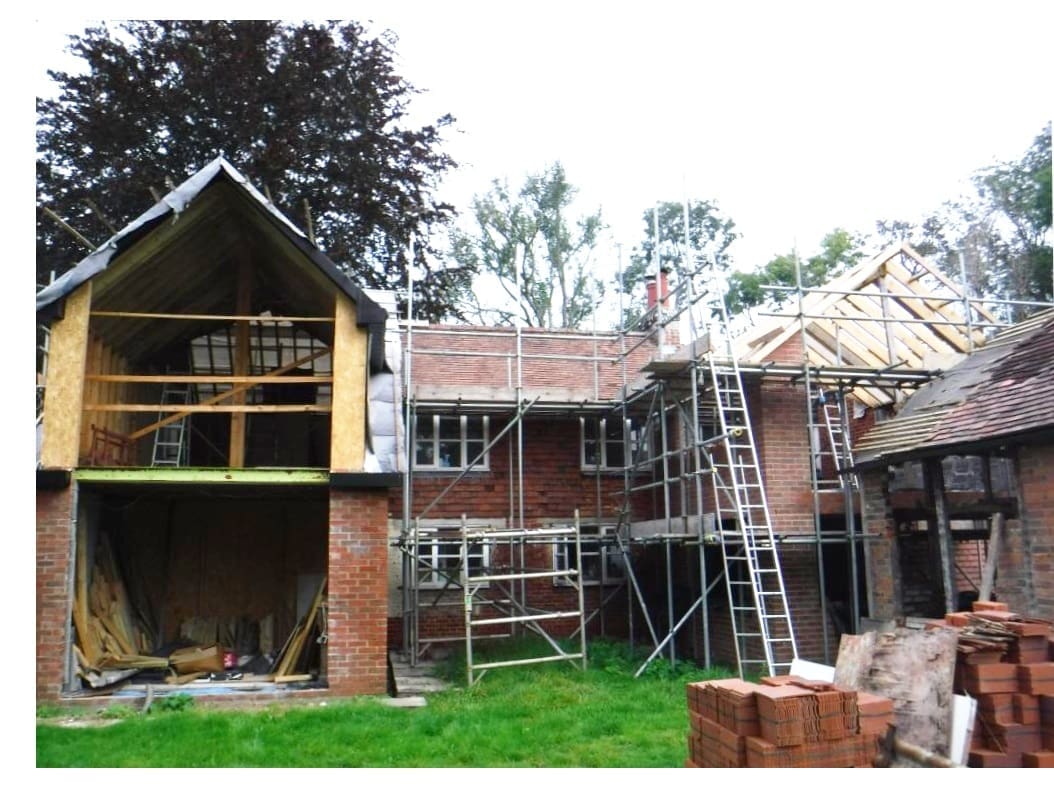 the roof space, with vaulted ceilings and Velux windows in the sloping roof. Clearly the bats could not make use of the roof space here!
Compliance with building regs
Being a new extension, it had to comply with today ¢s current Building Regs requirements. These will become ever more stringent as we progress towards zero carbon status. Plus, this corresponds to a considerable amount of polyurethane insulation board between the rafters. If you use bitumen felt, it requires a 50 mm ventilated space beneath it and even more insulation. This would reduce the available headroom and make the skylight windows awkward to fit.
Assessing the risk to Bats
Because there was only a risk of individual bats occasionally using the space under tiles, TLX Batsafe was a suitable choice. Being a mesh-covered breather membrane, it prevents bat claws from contacting the polypropylene spunbond material (fibres of which can fluff out and entangle the bats), and conversely, prevents the breather membrane from being punctured by the bat claws. Reducing the depth of insulation is a welcome benefit. Plus, you don’t need the additional 50mm ventilation space as you would with bitumen felt.
Batsafe has been tested for resistance to bat claw abrasion (using a laboratory test devised by a bat researcher to mimic the process) and so it should not be possible for the fibres to be pulled out by their claws because of the mesh bonded to the surface. Bats can choose whichever part of the roof they wish to spend the day, without any risk.