
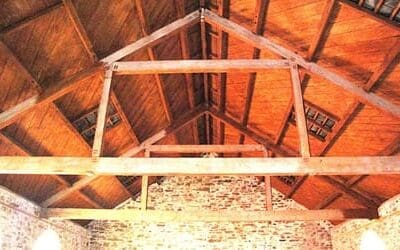
Re roofing boarded roofs can be problematic
Typically the dwelling might be a barn conversion, possibly with a lath and plaster ceiling below which you shouldn’t disturb. Or else with the owner having a desire to retain exposed rafters. Another scenario would be a large public building dating from before the mid-twentieth century. Here, the budget allowed for reroofing but where the cost of carrying out conventional insulation would be prohibitive, in spite of ongoing substantial heating costs.
Raising the roof height was not an option
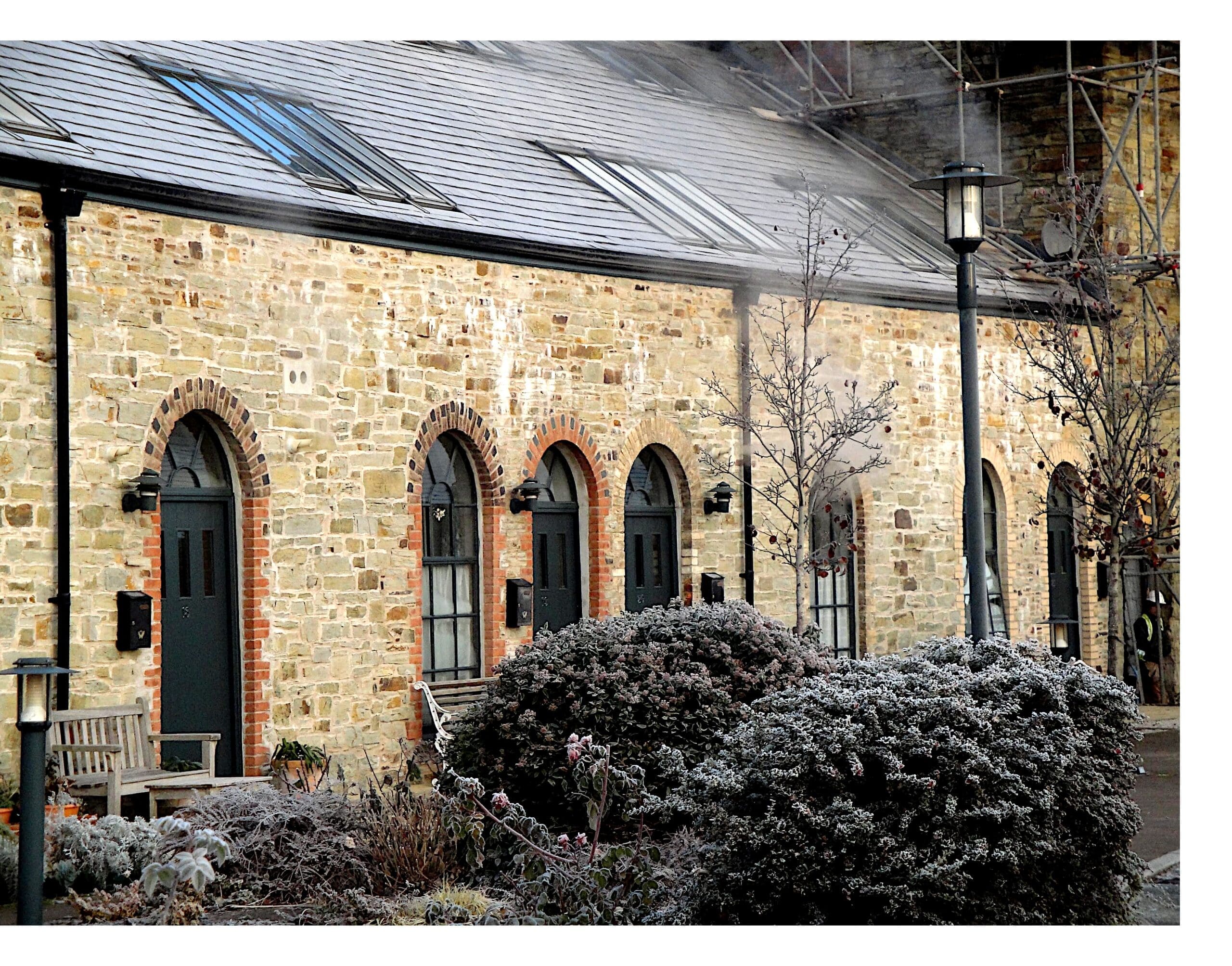
And even today, new build designs have cut rafters that require strengthening by the use of sarking. Lostwithiel Carriage 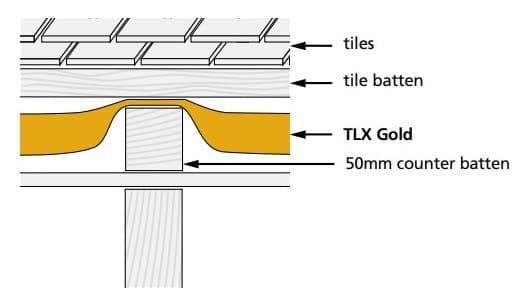 Works, designed by Brunel, is one such example. A Listed building where raising the roof considerably was not an option, the chosen solution was to have a layer of TLX Gold used over the boarding. It was draped over counter battens with the tile battens going directly on top.
The building is now a row of sympathetically converted cottages, with exposed rafters internally. In the case of Bankfield Museum in Halifax, a Victorian building where one section was undergoing reroofing, using TLX Gold added nothing to the labour costs involved, yet conferred substantial insulation benefits.
 The Problem: How to decide the best way to insulate a boarded roof given the financial and constructional constraints of the job.
The Solution: TLX Gold can be used directly over the boarded roof, draped over 50mm counter battens, to leave an unventilated air gap between the low emissivity breathable undersurface and the boarding, giving a U-value of 0.69 W/m2K. If it is possible to raise the roof then a continuous sheet of PIR between can reduce it further. You can meet Building Regulations requirements of 0.18 W/m2K with 85mm PIR. There is no condensation risk if a well-sealed ceiling is in place. And you may do a risk analysis calculation for other buildups. Even including those which have additional insulation between the rafters such as might be necessary for new build designs.