Breathable membranes are a unique form of insulation material. They are particularly valuable when used in pitched roof projects as they prevent the build-up of condensation. This can lead to damp, mould and rot. Which, in turn, can lead to structural damage within a building. A breathable membrane can prevent these problems from occurring. But what are breathable membranes? How do they work? And why are they so important? Hereâₒs everything you need to know about breathable membranes:
Why Are Breathable Membranes So Important?
Breathable membranes are important because they help to prevent damp. They can also keep mould at bay, with damp often being the root cause of mould. Damp can cause breathing problems in affected homeowners or tenants. It can also lead to frost damage or structural damage if left unchecked. For this reason, breathable membranes should be considered essential. They allow insulated buildings to release surplus moisture vapour into the air. In short, breathable membranes ensure that properties remain dry whilst still being able to breathe.
Another benefit of breathable membranes is that they make insulation work more effectively. Without a breathable membrane, moisture will build on the insulation. This layer of moisture will make the insulation ineffective. This will leave your home vulnerable to heat loss, and increased heating bills.
What Protection Do Breathable Membranes Provide?
Whilst they may be relatively thin layers of material, breathable membranes are strong. They are water-resistant, snow-resistant, and dust-resistant. They ensure that anything you donâₒt want in your property stays out! For this reason, breathable membranes are ideal for use in situations where exterior cladding is not completely watertight. Tiled roofs or framed wall constructions are great examples of this.
One of the most frequently asked questions about breathable membranes is ˜how do breathable membranes work?âₒ In short, breathable membranes work by providing ventilation and reducing condensation risk, whilst still providing a waterproof layer of protection. Breathable membranes prevent water from entering a property. They also serve the secondary purpose of preventing environmental impurities, such as dirt or rain, from entering the structure. Breathable membranes protect properties from damage and keep them watertight. They also have thermal benefits, helping to insulate the property in many cases.
How Do TLX Breathable Membranes Manage Condensation Risk?
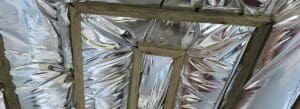
Managing condensation risk is an integral role of a good breathable membrane, and TLX breathable membranes are amongst the best on the market. Using TLX UV breathable membranes will reduce the risk of condensation build-up in your roof or wall space considerably. This is because these watertight membranes allow air to pass through them. This will ensure that any vapour that is carried within the air particles, or other environmental element, has somewhere to go. You can combine these benefits with the traditional benefits of insulation by using TLX Gold multifoil insulation. Not only does this offer superior insulation properties, but it also boasts an integrated UV25 breathable membrane. This membrane has been designed to prevent condensation.
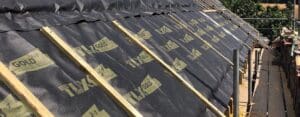
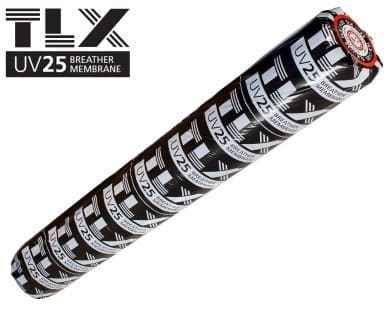
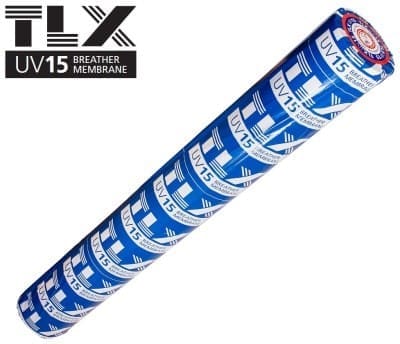
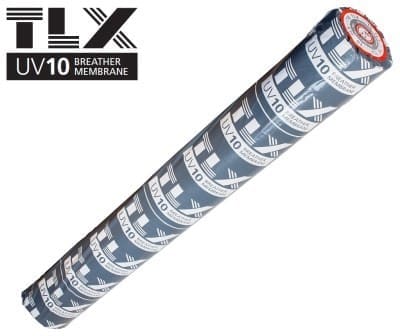
TLX manufactures three different grades of breathable membranes. They are the UV10, UV15, and UV25. The main difference between these three membranes is their strength, with the UV10 being the most lightweight and the UV25 being the strongest. The type of renovation or build project you are undertaking, as well as the other materials you are using, will determine which UV level is right for you.
 |
 |
 |
How to Install a Breathable Membrane
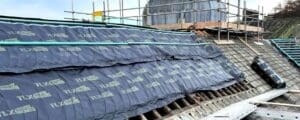
When installing a breathable membrane, it should always be positioned on the cold side of the insulation. When insulating a roof, this would be the side closest to the tiles. This allows the membrane to prevent any moisture that gets through the external cladding to pass any further.
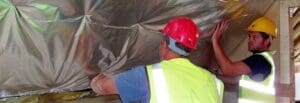
Different TLX breathable membranes should be installed in different ways. You should always install them in accordance with the manufacturer’s instructions. But here is a general guide for how to install a TLX breathable membrane:
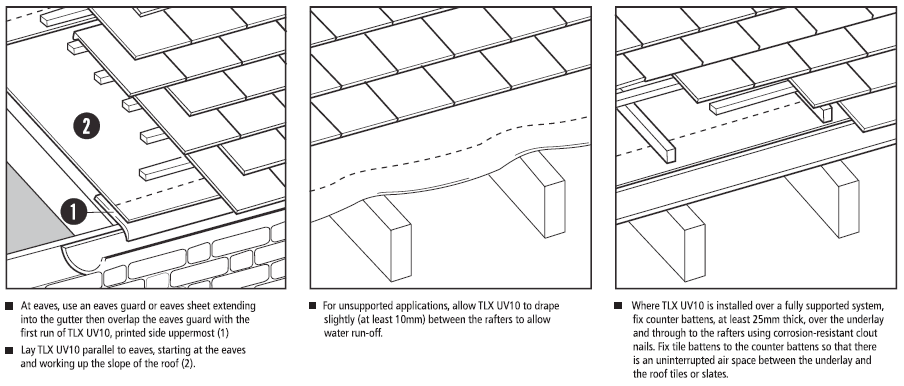
- Install an eaves support tray. This will support your installation and is sometimes also referred to as an eaves guard. You could also use a UV-resistant membrane that is fitted along the eaves. Each option is effective, but it is important not to miss this step.
- Lay the breathable membrane. This should be positioned parallel to the roof eaves. The printed side of the membrane usually faces outwards. The bottom of the membrane should overlap the eaves support tray by at least 150mm. But donâₒt overlap this too much, or it will be exposed when the tiles are laid, creating an untidy finish.
- Drape the breathable membrane. The membrane should not be pulled taut, unless you intend to counter batten your installation.. If not, the membrane should drape slightly between the timber rafters or counter battens. Aim for a dip of between 10mm and 15mm. Once you have achieved your desired drape, add a clout nail to hold the membrane in place temporarily. The tiles will hold this into position in a more permanent way when they are fitted.
- Repeat this process, starting at the bottom of the roof and working upwards. You should overlap your layers of breathable membrane, but the amount of overlap required will be determined by the manufacturer. If the overlap does not coincide with a timber batten, an additional batten can be installed to ensure the overlap remains, and to prevent the tiles from touching the membrane. If you are using TLX breathable membrane then your battens should be at least 25 mm thick.
 |
Installing a TLX breathable membrane is a relatively straightforward and simple process. It is one that will have considerable benefits to your property. TLX breathable membranes improve structural integrity and protect properties from condensation and water damage. TLX breathable membrane is fully BBA approved and will last as long as traditional roof tile underlays, providing they are not exposed to sunlight for long periods. It is an investment worth making for the security of your home.
Do you require a bespoke solution or advice?
We would love to hear from you. Our helpful team of product experts are on hand to help with bespoke solutions. Simply call+44 (0)1204 674 730 today.