3 minute read
-
No single insulation material can meet building regulations on their own
-
Using a multifoil alongside PIR board or mineral wool is the most effective way to maximise thermal performance
-
TLX Silver manages condensation risk by creating a vapour barrier
A modern approach
The days when insulation was just an afterthought to a loft conversion are long gone. U value requirements have tightened considerably over the past few decades, to a point where mineral wool alone simply won’t meet the standards set by building control. The required U values for rafter-level insulation is now 0.18w/m2k, which is tricky enough to achieve with new builds. But when retrofitting insulation in older properties, these new standards can seem impossible to meet.
Old buildings tend to have shallow rafters, so you need a thin, efficient material to give the best performance whilst maximising space. If Rockwool alone was used, you’d need rafters that were over 220mm deep to accommodate the amount you’d need to meet building regulations. Even with a higher-grade material such as PIR board, you will need 165mm set in-between the rafters to achieve 0.18w/m2k.
A single material alone won’t meet 0.18w/m2k
Traditional insulation materials such as mineral wool and PIR board take up too much rafter space to be practical. Especially in older buildings with shallow rafters. Multifoil insulation gives a higher thermal performance, but still doesn’t meet regulations on its own. Therefore, a hybrid system of insulation is needed, whereby each layer of the build-up is intrinsic to the performance of the structure.
 Hybrid insulation systems
Nowadays, it’s common practice to use multifoil insulation in conjunction with traditional insulation materials to meet building regulations. The optimum depth of a multifoil is 30mm, so they don’t take up too much room. Additionally, since they have reflective surfaces, they trap heat and therefore give a greater level of insulation.
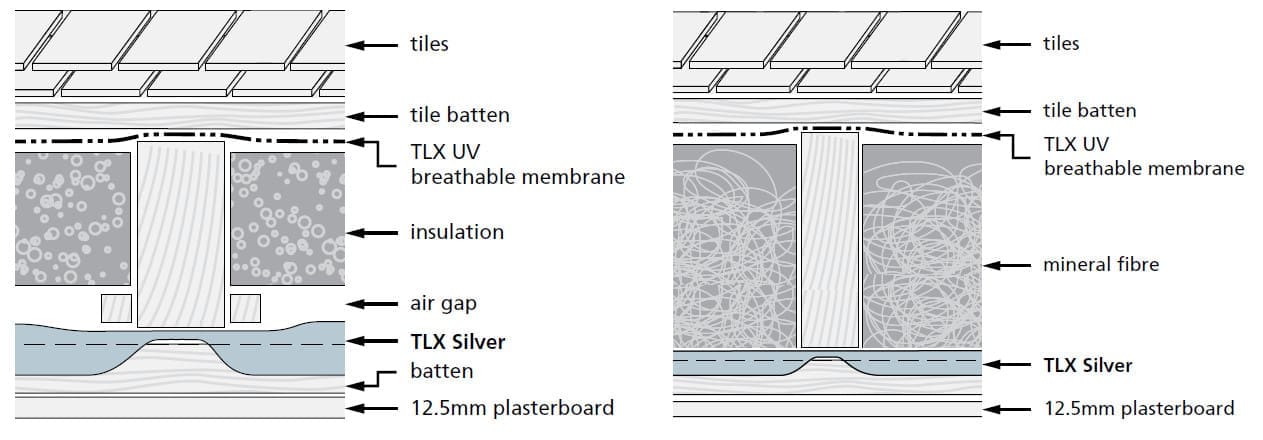
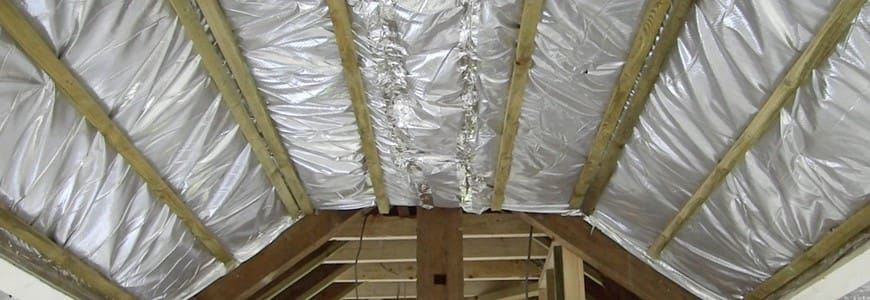
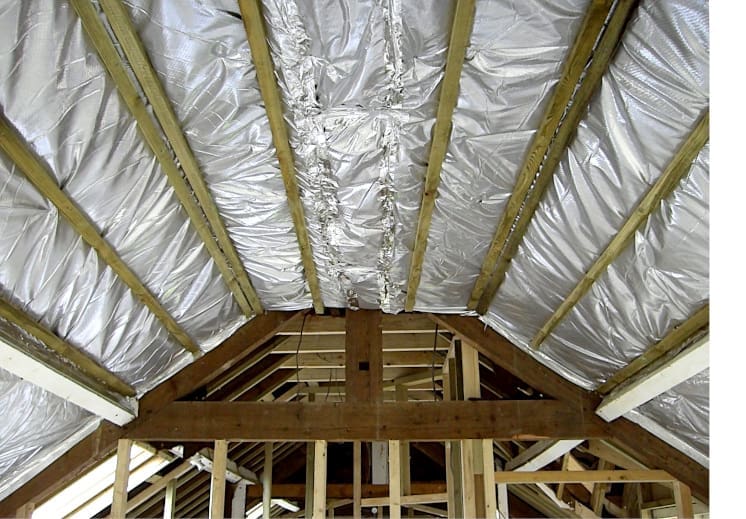
Our TLX Silver multifoil insulation can be installed to the underside of the rafters, creating an insulating vapour barrier to manage condensation risk whilst adding thermal benefit. Mineral wool or PIR board can then be fitted in-between the rafters.
Air gaps are important too
TLX Silver multifoil insulation has shiny surfaces that reflect heat. Therefore, you need an air gap on either side to create a layer of static air. Use 38x38mm battens set crosswise to fix them in place. This should create a sufficient air gap for heat reflection.
For example, secure TLX Silver under 125mm rafters with 85mm of PIR board in-between to achieve 0.18w/m2k. You need less PIR, and the air gaps come free!
Installation is simple
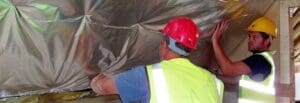
Fit the PIR 30mm up from the bottom of the rafters, staple TLX Silver to the underside then secure with 38mm x 38mm battens set crosswise at 600mm centres, then plasterboard. Consult our installation guide for more helpful tips and install advice.