4 minute read
Using multifoil insulation such as TLX Silver 2-in-1 insulating vapour barrier gives a 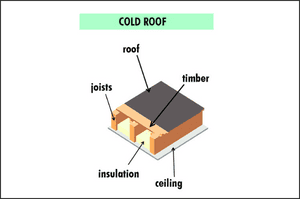 great space-saving solution for a cold deck roof. Using a good vapour control layer (VCL) beneath the rafters will help to prevent condensation. TLX Silver multifoil insulation reduces the depth of additional insulation required to meet building regulations.
How do you Insulate a Cold Deck Roof?
Install roof insulation at ceiling level in a cold deck roof. The space in between the rafters is colder than the rooms beneath, especially during winter months. This construction type is popular in flat roofs, but you can use it in pitched roof constructions. Cold deck roofs require a carefully considered insulation profile to minimize condensation risk.
Condensation Risk is a Real Problem
 Water vapour is generated within the home throughout the day, in fact, it may surprise you just how much! The average household generates approximately 12-15 litres of water vapour each day. Warm air particles hold water vapour around us. Since warm air rises, air generated from rooms within the home will travel up into the roof space.
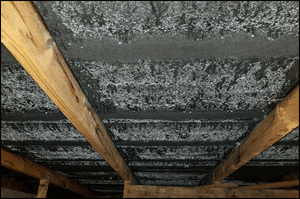
Warm air is more effective at holding water vapour than cold air. So, once the warm air meets with cold air, the cooler air particles will not be able to hold onto the vapour particles, so water droplets then form on surfaces. Condensation doesnâₒt just cause unsightly timbers, it also damages them. If left for a prolonged period, it can weaken them, causing damage.
Managing Condensation Risk
So, how do we manage this risk? Vapour barriers are a great tool. They create a barrier preventing water vapour from entering the roof space from below. They come in various forms and thicknesses. When installed correctly, they can significantly reduce condensation risk. Our TLX Silver multifoil insulation is an excellent vapour barrier, it is completely airtight, whilst also providing roof insulation.
Where to fit a Vapour Barrier
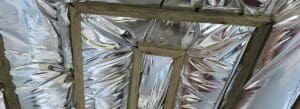
Install vapour barriers underneath roof rafters to bridge the gap between the cool air 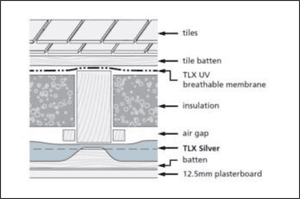 between the rafters and the warmer air in the rooms below. This prevents condensation as the water vapour inside warm air cannot travel through this barrier and therefore, cannot cool and cause condensation.
What Other Factors Need to be Considered?
Airtightness: A good vapour barrier must be fully airtight. If it isnâₒt, water vapour can travel through it into the cold space and cause condensation. Our 2-in-1 insulating vapour barrier, TLX Silver multifoil insulation is especially effective as it is ultrasonically
welded, meaning there are no seams. Therefore, it creates a completely airtight layer.
Insulation: Multifoil insulation is growing in popularity, the beauty of them is their ability to provide multiple jobs within the structure of a roof or wall build up. Our TLX Silver multifoil insulation not only provides an excellent vapour control layer, but it also gives an excellent level of insulation. TLX Silver insulates and prevents condensation at the same time, meaning it is a great space saver.
Thickness: TLX Silver multifoil insulation is the perfect thickness at 30mm. If itâₒs thicker, it gains little thermal benefit, whilst if itâₒs any thinner, you lose considerable performance benefits.
TLX Silver Space Saver Multifoil Insulation
If you have an older property, you may have low ceilings in your first-floor rooms. To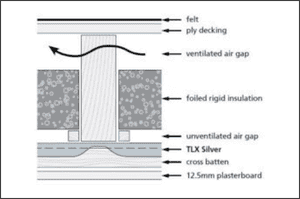 make matters worse, because building regulations werenâₒt as stringent as they are today, many old buildings were made with very shallow roof profiles, with rafters as shallow as 75mm. Shallow rafters canâₒt hold as much insulation. Especially traditional insulation materials such as mineral wool and PIR board.
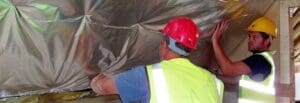
However, you can secure multifoil insulation such as TLX Silver, directly underneath the rafters. This forms a vapour barrier and insulation all in one. Less additional insulation is required in between the rafters to achieve U-Value requirements.
Therefore, the build up profile is reduced.
Do You Require a Bespoke Solution?
We would love to hear from you. Our helpful team of product experts are on hand to help with bespoke solutions and U-Value calculations For technical queries, simply call +44 (0)1204 674 730. Also, our LABC-approved solutions guide has a wide range of pre-calculated solutions. You can download your free copy from the footer below.