4 Minute read
- Checking through the known condensation causing factors will prevent damage in the long term
- Correctly fitted insulation in conjunction with breathable materials will prevent condensation risk
Identify the source
Identifying the source of dampness is often problematic. But there are some considerations that might give you some clues as to where the water is coming from; is it widespread or localised?
The first thing to eliminate is water entering through the roof. Check that water is not coming in through failures of seals around penetrations. Fixtures requiring detailing “ such as valleys and rooflights are frequent culprits. Chimneys (where the mortar may have failed), light pipes, soil vent stacks and flashings are also problematic . All of these are possible causes of failure leading to water ingress.
Is the membrane intact?
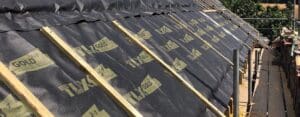
If you can’t find an obvious leak source, make sure the breathable membrane is in tact. However, breathable membranes can only fail if:
- The breathable membrane has a hole (possibly introduced when nailing to the rafters or accidentally ripped)
- From exposure to wood preservative
- From exposure to UV light for too long. This will cause membrane deterioration.
Testing, testing
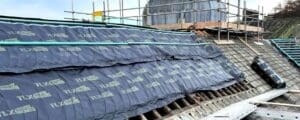
All TLX UV breather membranes are tested to the requirements of BS EN 13859, which includes a test to sustain a hydrostatic head of 200 cm of water. We retain samples for several years to ensure that, in the event of a complaint, the quality of the membrane is not a factor.
If the damp patches are more localised, often at the edges of the room, then condensation is a possibility. Water vapour produced within the house (and it’s estimated that this is typically 12-15l per day) migrates through the plasterboard, but when it reaches the cold side of the insulation it may condense if the temperature and humidity reach dewpoint conditions.
Factoring in the vapour control layers
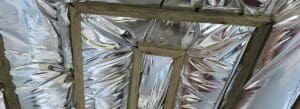
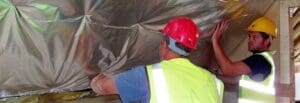
Modern houses have vapour control layers (such as multifoil insulation), foil-backed plasterboard or polythene sheet. Vapour barriers go on the warm side to prevent water vapour entering the rafter space in the first place. Ventilated spaces remove vapour from the cold side. Breathable membranes allow vapour to escape into the tile batten space, which should be sufficiently well-ventilated to remove it.
Where might the vapour be coming from?
Whether or not condensation will occur is a balance between how much water vapour is being produced in the room below, how easily it can get into the rafter space, how easily it can get out, plus, of course, the temperature.
If the ceilings are not well sealed, with gaps around penetrations, (such as pipework, vents, etc.) then water vapour can simply be carried into the rafter space by air currents rather than just diffusion through the plasterboard. So, seal around penetrations with polyurethane spray foam or silicone sealant as appropriate.
Two rooms in particular tend to be the usual suspects
Candidates for condensation problems are kitchens and bathrooms without vapour barriers or extractor fans, where there are high humidity conditions with nothing to stop the water vapour diffusing through the plasterboard. Rooms with downlights where the vapour control layer has been cut around the fittings also present a problem, especially since the localised heating funnels warm air around the fitting into the rafter space. This is even more of a problem if there is multifoil insulation over the rafters on the cold side. As the water vapour may condense underneath it then drip onto the light fitting. You may run into difficulty if you have a vapour-impermeable bitumen felt inadequately ventilated beneath it.
Consider interstitial condensation too
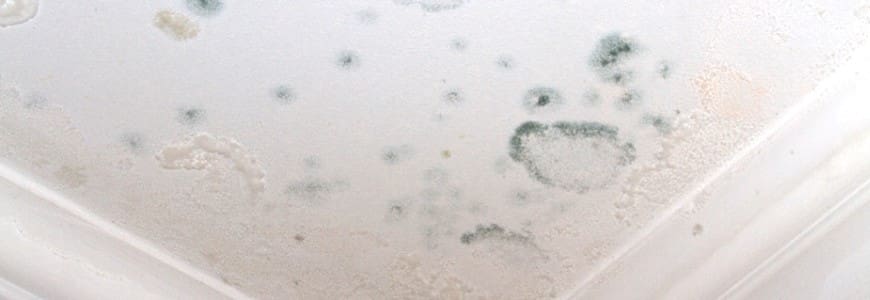
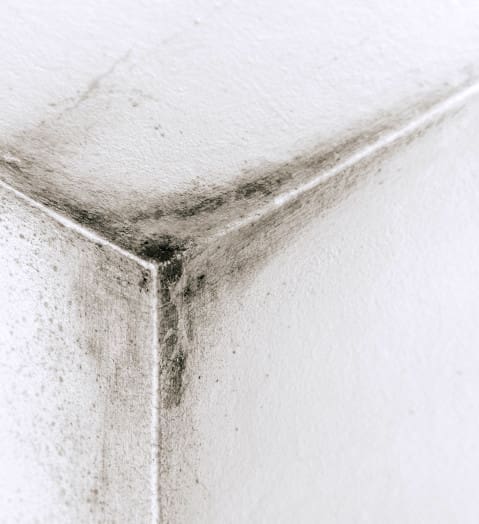
The above situations all relate to interstitial condensation, where water condenses in the rafter space then drips onto the back of the plasterboard. However, you may also find damp patches “ usually accompanied by mould growth “ at internal cold spots where there are thermal bridges. It may occur where there is insufficient loft roll at the edges of the roof. This creates a cold spot, and insufficient air circulation in the corner of the room below. Where plaster ¬Ëœdabs’ have been used to secure plasterboard to a single brick wall, providing a pathway for heat loss, distinct damp patches may be present over the dabs. Cavity wall insulation failure is another example.
Inadequate ventilation is always a problem
Perhaps surprisingly, inadequate ventilation of the tile batten space can also contribute to condensation. The water vapour from inside the house ends up here. Therefore, you need to sufficiently ventilate the space to sweep it away. This governs the amount of vapour pulled through from the inside. Because vapour movement only occurs when a concentration gradient exists. So, you will find that condensation inside a sealed rafter space is being influenced by inadequate ventilation outside.
BS 5250:2021
BS 5250:2021 Code of Practice for Control of Condensation details all the ventilation requirements for different roof configurations. Standards are often available for consultation via your local library. So it can be worth checking if your ventilation and insulation conforms to this advice.