
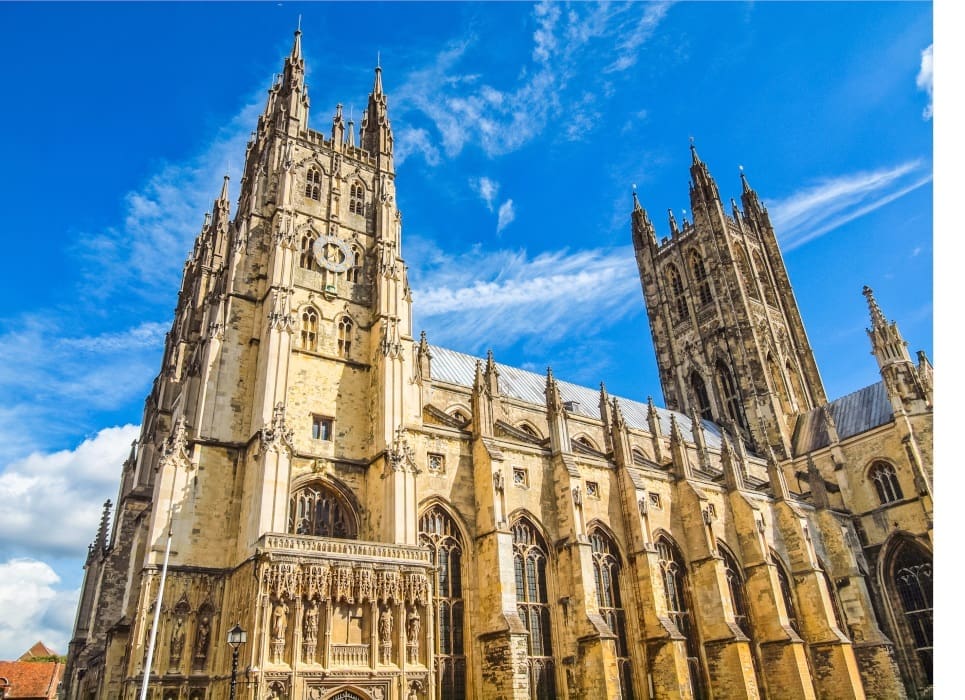
 Few buildings can compare in grandeur and magnificence to Cathedrals. The architecture of the intricate and intelligently composed design is timeless, priceless and something to be preserved. However, it is very difficult to fit insulation and achieve airtightness due to the complexity of the construction, owing mostly to the geometric design of the traditional high ornate ceiling.
Therefore, when faced with the challenge of upgrading the insulation to keep the congregation warm in winter and cool in summer, there is a fine line to tread, balancing the level of insulation needed, whilst still maintaining the character of the building. The trick is to get the best of both worlds, but without the right material, this can be a thankless task. With 20 years of R&D in high performance, breathable multifoil insulation, TLX can help overcome the many problems associated with difficult to insulate buildings.
Providing a comfortable internal environment:
Air can sometimes leak from inhabited rooms into the roof space above. This is caused by a variety of factors including plumbing or electrical work penetrations into the ceiling. If not properly managed with insulation, this could potentially cause condensation, since air carries moisture, and when it reaches the cold side of the roof, it rapidly cools. The careful placement of ventilation will mitigate this risk.
The importance of ventilating in the right place:
Limiting the risk of condensation:
Ventilation is introduced at the eaves in a traditional roof system, allowing any moisture carried into the roof space from below to escape; This goes a long way to limit the risk of condensation. With a warm roof construction, the trick is to minimize heat loss underneath the top layer of insulation as much as possible to gain the full benefit. For example, TLX Gold requires a minimum 10mm unventilated air gap underneath to keep the heat in. If the space within the rafters permits, a 20mm unventilated air gap is optimum for heat reflection.
TLX Gold intelligently limits the risk of condensation as it is fully breathable; therefore, it allows any water vapour entering the roof space to pass through it whilst reflecting heat back from its shiny underside.
TLX Insulation options:
Semi-exposed rafter solution:
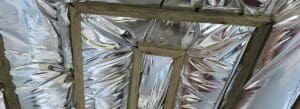
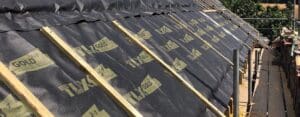
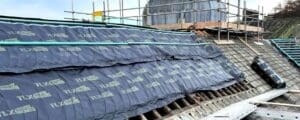
TLX Gold multifoil insulation can help to maintain a Cathedral roofline. Laid over the rafter and counter-battened above with 38x38mm battens, TLX Gold will sag into the rafter space by approximately two thirds of its thickness. You need an optimum 20mm unventilated air gap underneath for heat reflection against its shiny under surface. You can then cut PIR board to fit in-between the rafters, this maintains the character underneath. However, if your rafters are shallow, this build-up may not always be feasible. Therefore, you may need to consider completely exposing the rafter and raising the roofline. To do this, add plasterboard directly above the rafter and build your insulation profile up from there.
Fully exposed rafter solution:

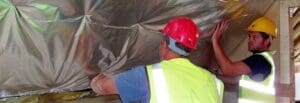
TLX Gold is the perfect addition to ensure complete airtightness and a thermally efficient structure. You can drape it directly over the top of the rafter or pull it taut and counter batten it. If the rafters are to be left fully exposed, whether it be to maintain the character or to save internal space, the roof may be boarded, then a 50mm counter batten is laid above the board with TLX Gold draped over the top of this.
The counter-batten acts as a mini rafter. The shiny under surface of TLX Gold is fully breathable, yet it reflects heat. Therefore, there should be an optimum 20mm unventilated air gap to facilitate heat retention.
As a single layer, TLX Gold achieves a U value of 0.69w/m2k. You can lay PIR board above the plasterboard to achieve a lower U value. The thicker the PIR board, the lower the resultant U value will be. Although, adding additional insulation will raise the roofline.
U value requirements:
Historic buildings are sometimes listed and therefore building regulations are waivered in favour of preserving their character. Therefore, a simple improvement with the implementation of TLX Gold over the rafters will provide a significant thermal energy saving. However, building regulation Part L1B requirements currently stipulate a u value of 0.18w/m2k for non-listed buildings. The U value achievable will vary greatly according to the specific requirements and limitations of your project. Rafter depth, rafter centers and the amount of additional insulation used can affect this. A completely uninsulated roof has a U value of 3.85w/m2k. Therefore, reducing this to 0.69w/m2k with TLX Gold alone is a great energy saving of 82%. If used as part of a hybrid system with PIR board of various depths, this will provide extra thermal benefit and U values as low as 0.13w/m2k can be achieved.
For bespoke U value calculations, please don’t hesitate to call our helpful team of product scientists on 01204 674 730.
We have written a number of case studies featuring historic buildings, further details HERE.