4 Minute read
How does Conservatory roof insulation work?
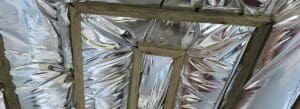
Conservatory insulation works very much in the same way as standard home roof insulation and should be treated as such, if the aim is to convert the conservatory into a liveable space. The use of a multifoil is an effective way to insulate because it controls the three forms of heat transfer: convection, conduction, and radiation. TLX Silver multifoil insulation is flexible and lightweight, simply install it to the underside of the roof rafters to prevent heat loss.
TLX Silver has inner layers of wadding which reduces heat loss by conduction through the multifoil. Wadding is interspersed with layers of film which prevents the movement of air. These layers work together to form an airtight barrier, in turn reducing the amount of warm air lost to the outside. It effectively acts as an insulating vapour barrier, managing the risk of condensation by preventing moisture entering the roof from the inside.
 How to install conservatory roof insulation
1: Firstly, remove the roof, exposing the rafters for ease of access to install the insulation.
2: Install TLX Silver to the underside of the rafters, secured in place with 38x38mm battens set crosswise. Fit a standard plasterboard underneath.
3: Fit additional insulation in-between the rafters. Maintain an unventilated air gap between the multifoil and rigid board. An air gap is not required if you use mineral wool.
4: Introduce ventilation above the insulation; the optimum air gap is 50mm
5: Fit an OSB board above the rafter, providing protection for the insulation against unwanted exposure to UV light
6: Install a breathable membrane above the OSB board
7: Fix your chosen roof covering directly to the membrane. Alternatively, the breathable membrane can be tile-battened before it is fixed, in accordance with the manufacturer’s instructions
Further considerations:
It is important to ensure the TLX Silver does not come into contact with bare electrical wiring. Prepare beforehand to assess the likelihood of this. PVC coated or de-rate bare wiring and seek guidance where needed from a qualified electrician.
Storage:
- Store TLX Silver on a flat surface
- Protect TLX Silver from sunlight and weather
- Ensure that TLX Silver does not come into contact with heat sources above 80 degrees Celsius
What to consider when fitting insulation in your conservatory
First and most importantly, you will need to remove the roof to ensure it is a solid roof conversion. We would not recommend installing insulation simply to the underside of the existing rafters with no barrier above, because this would expose the product to UV light. Plus, since the surfaces of multifoils and PIR board are extremely reflective and attract heat, the unventilated air space next to these materials would get incredibly hot, specifically in the summer months. To avoid this, the use of an OSB board beneath the tiles and waterproof underlay is an important requirement.
What is the best insulation for a conservatory roof?
Use TLX Silver in conjunction with PIR board or mineral wool for a solid conservatory roof build to achieve the optimum thermal performance. The use of TLX Silver will significantly reduce the amount of additional insulation needed to meet building regulation requirements. This retains head height for a more comfortable internal environment. TLX Silver is also lightweight and quick and easy to install, without the need to cut the material, minimising unwanted wastage. To cut the multifoil, use Kretzer Finny scissors.
Where to buy conservatory roof insulation
You can purchase TLX Multifoil Roof Insulation at your local builders’ merchant, roofers’ merchant or major roofing distributor. You can find TLX Silver multifoil insulation at the following:
- Travis Perkins Trading Co Ltd
- Fortis member branches
- Jewson
- SIG
- Huws Gray
- Independent roofer/builders’ merchants
If your preference is to order online, The Roofing Superstore can also be of assistance.
Pros and Cons of conservatory insulation
Like everything, there are Pro’s and Con’s to conservatory insulation. It’s all about getting the right balance and weighing up the benefits against the drawbacks and finding the best solution to suit the specific requirements of your build.
The cons of conservatory insulation:
- PIR board is difficult to cut
- It is difficult to achieve airtightness with PIR board
- Mineral wool is messy to work with
- Wool is awkward to fit in place because it is bulky
- Mineral wool is an irritant
The pros of conservatory insulation:
- TLX Silver is easy to install
- Our TLX Silver is lightweight
- TLX Silver provides complete air tightness
- When used as part of a hybrid system alongside additional insulation, TLX Silver can be used to achieve U value requirements
Conservatory roof insulation panels
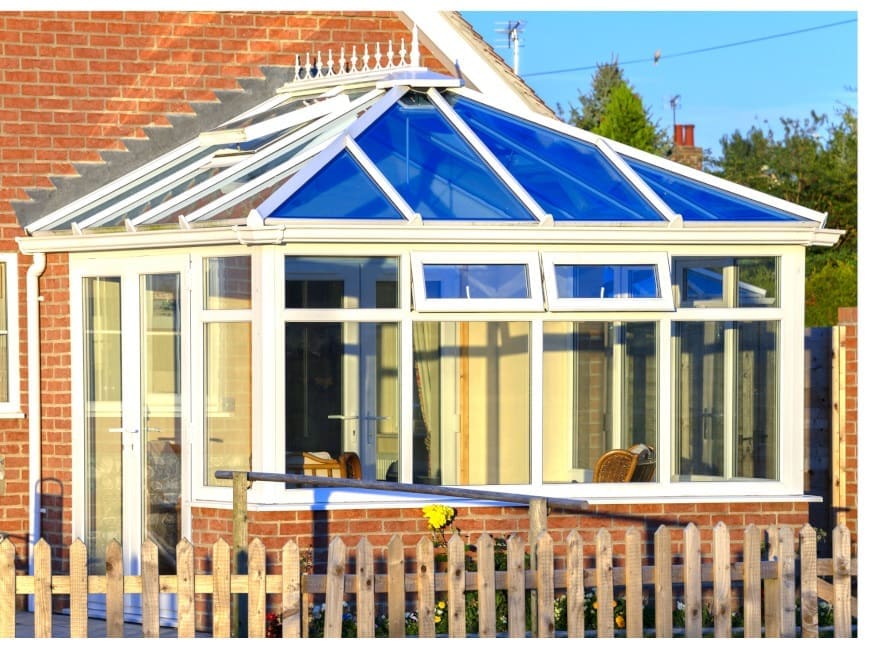
Roof insulation panels offer a direct replacement for a typical glass and polycarbonate conservatory roof structure. Plus, they reduce heat loss through a roof and are generally 24-32mm thick. Homeowners may use insulation panels to make their conservatory useable throughout the year because they provide a thermal benefit in winter and reduce glare in summer compared to the alternative glass roof.
Pros:
- They reduce heat loss through the roof
- Reduce external noise pollution
- Lightweight
Cons:
- Since they are a minimal thickness, they don’t offer much thermal benefit compared to a multifoil such as TLX Silver
- They do not ensure air tightness since they sit where the glazing would ordinarily go
- You need more additional insulation to achieve building regulations
Do building regulations apply to my conservatory?
Building regulations apply if your roof were intended to be a part of the habitable space within the home. For instance if the room has a heating source or if the adjoining doors are taken out to create an open living area. Additonally, building control require a U value of 0.18w/m2k. However there is some leniency depending on the restrictions of your build or if the building is listed. If you require a bespoke U value calculation, our team of product scientists are on hand to offer expert advice, please don’t hesitate to contact us on the number below.